Nvidia study says AI agents rarely need long context

Nvidia researchers found frontier models lost little or no accuracy on short, compacted contexts while cutting estimated serving costs several times over.
What it means for founders
If you run agents, your token bill may be paying for context the model does not need. Before treating a bigger context window as a requirement, try compacting far earlier than feels natural and storing big inputs as searchable files instead of prompt text.
Some closed model pricing already charges more for long requests. OpenAI's GPT-6.2 Astra costs more once a request passes 272,000 tokens, so short sessions save money on hosted APIs as well as on open models you serve yourself, where the paper's cost gap shows up directly in GPU hours.
The design lesson is to treat agent memory as a product decision: decide what the agent must carry forward, write it down as state, and keep everything else searchable on disk.
Watch whether model labs ship models trained for this style of state keeping, and whether Nvidia's own open model work picks it up.
What we don't know yet
The results come from Nvidia's own experiments, and we found no independent replication yet. The authors concede compaction is lossy: on the FRAMES multi hop question benchmark it cut accuracy by 1.3 to 3.7 points, and a task that needs every earlier detail can fail without a way to search the old history.
The story
Nvidia researchers argue in a recent paper that million token context windows mostly solve the wrong problem. Their tests found that frontier models given short, frequently compacted contexts did about as well as the same models working from full history, at a fraction of the estimated serving cost.
What the paper tested
The paper, "You don't need long context", by 12 Nvidia authors, went up on arXiv on November 3. Its starting point is a cost that flat per token prices hide: a token costs more to generate the deeper it sits in a context. Measured on H100s at on demand rates, each output token cost 3.6 times as much at a 256K window as at 16K for GLM 5.2, 5.6 times as much for Kimi K2.6 and 7 times as much for Qwen 3 Coder Next.
The team then ran Claude Opus 4.5 and GPT 5.6 Sol through 13 benchmarks, comparing full history with compaction: the conversation grows to a threshold, the model writes a compact summary of its state, and work restarts from that summary. On two coding benchmarks they also tested an extreme regime, single action compaction, which throws the conversation away after every action and carries only the running summary forward.
What they found
On long agent tasks such as SWE-bench and Terminal-Bench, compaction moved accuracy between a 3.7 point loss and a 5.6 point gain for Opus, and between a 3.3 point loss and a 4.4 point gain for Sol. In no more than 5 of 22 settings did either model drop more than 2 points. Estimated serving savings were 2.2 to 8.8 times for Opus and 2.4 to 5.0 times for Sol.
For long documents, the harness stored them as files instead of pasting them into the prompt, and let the model search them with tools like grep and sed. Accuracy held or rose in almost every case, and estimated savings ranged from 4.4 times to, in one Sol result, over 200 times.
The extreme setting mostly held up. Under single action compaction, median peak context fell to 7K to 9K tokens. Opus scored 70.2% on SWE-bench Verified against a 70.0% baseline and gained 4.6 points on Terminal-Bench, while Sol lost 2.0 and 3.3 points. The authors propose "semantic state space models" trained around that kind of plain language state.
Sources
Primary sources
Reporting
More in Research
- Anthropic's Alpöge claims a Riemann proof with ClaudeLevent Alpöge posted a Lean-only proof of the Riemann hypothesis made with Claude. Early checks say it compiles; nobody has explained it yet.TechCrunch · 6d ago

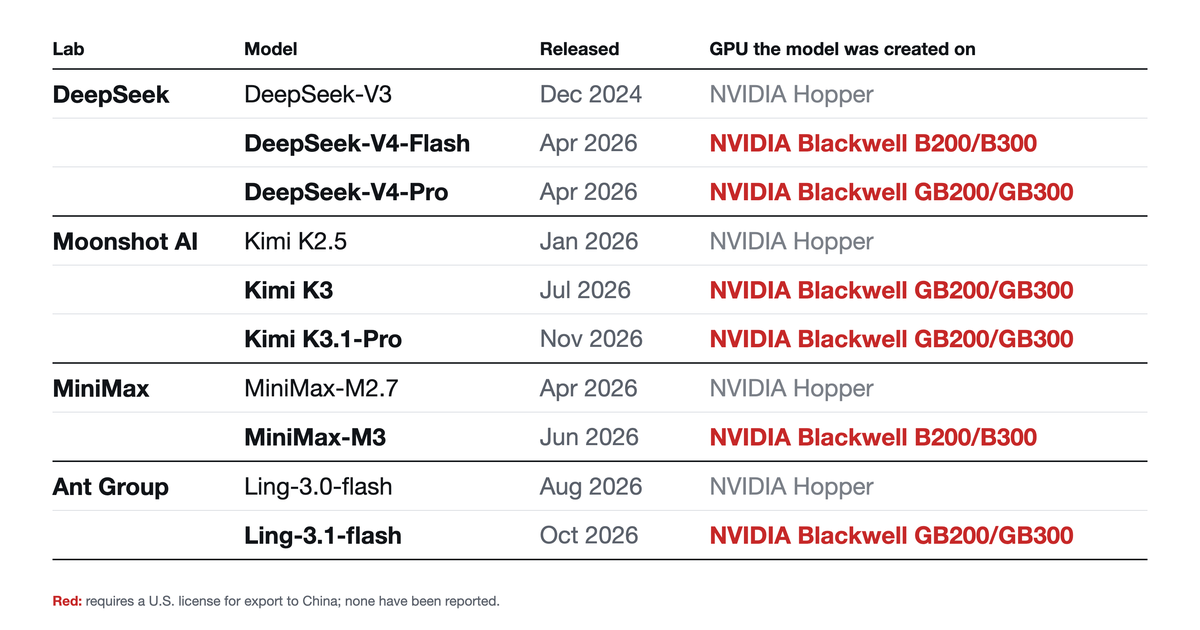
- Six Chinese AI models carry Blackwell fingerprintsA forensic study of open weights says six models from DeepSeek, Moonshot, MiniMax and Ant Group were started on export-controlled Blackwell chips.TechCrunch · 13d ago
- Physicist says Astra led his Standard Model proofA physicist says OpenAI's GPT-6 Astra took the lead on the detailed proof behind a candidate lattice definition of the Standard Model.OpenAI · 11d ago
- Podqi finds chatbots sending shoppers to risky sitesA Podqi study found Perplexity, ChatGPT and Gemini showed risky or fake retail sites in 4% to 15% of shopping answers.The Verge · 14d ago

- DeepMind launches AlphaGenome 2 DNA model via API
For founders: A startup cannot use the AlphaGenome Services for company work. The AlphaGenome terms open them only to individuals, non-commercial organizations and…
Google DeepMind · 15d ago
