Physicist says Astra led his Standard Model proof
A physicist says OpenAI's GPT-6 Astra took the lead on the detailed proof behind a candidate lattice definition of the Standard Model.
What it means for founders
The pattern matters more than the physics. An expert brings the strategy, the model helps turn it into a construction and drafts the detailed proof, and outside specialists question it. That is a workflow you can copy in any field where answers can be checked: legal analysis, chip verification, formal methods, financial models.
The checking step is the product. Craig credits three outside experts with helping him build confidence in a proof he says the model took the lead on. If you are building AI for research or technical work, the opening is in review tools: making a model's long argument readable and testable by a human.
OpenAI now has a dedicated blog for science results, including posts by outside researchers, which makes these claims a regular part of how it competes. Watch how lattice physicists respond to the preprint.
What we don't know yet
Craig calls the method he and Astra proposed "far more an answer in principle than an answer in practice." It is not yet useful for realistic lattice simulations, and he is still checking whether it satisfies reflection positivity, a condition that helps connect it to a quantum theory where probabilities are conserved. The construction holds under a bound on field strengths at the scale of the grid, and defining the theory in continuous spacetime remains open. How much of the proof was Astra's own work rests on Craig's account.
The story
A physicist working with OpenAI says its GPT-6 Astra model "took the lead in developing the detailed proof" behind a candidate definition of the Standard Model of particle physics on a lattice. Nathaniel Craig, who leads the particle theory group at UC Santa Barbara and is a visiting scientist at OpenAI, described the work in the first guest post on OpenAI's new science blog on November 15.
The result is in a preprint Craig posted to arXiv on October 6, titled "A gauge-invariant measure for lattice chiral fermions." The abstract calls it "a candidate nonperturbative lattice definition of the Standard Model." It is a preprint, and Craig writes that "scientific dialogue among experts is required" to judge it.
The problem
The Standard Model matches experiments extremely well, but physicists still lack a definition of the full theory that does not treat its interactions as small corrections. Putting spacetime on a grid, a lattice, gives that kind of definition and lets computers calculate directly, which has worked for the strong force.
The weak force is the obstacle. It treats left-handed and right-handed particles differently, and the obvious lattice rules add right-handed partners nobody asked for. Earlier physicists solved most of this, Craig writes, but the rule for setting a particular phase for the full Standard Model "remained open for more than 25 years."
What Astra did
Craig says he had a strategy: copy the force fields onto a series of finer grids and add up the differences between neighbouring grids to get the phase on the original one. He had not been able to prove it worked in every case. Astra, he writes, suggested how to carry the fields onto finer grids, showed the comparisons would converge, and took the lead on the detailed proof. Craig writes that human experts also played a key role: lattice theorists Maarten Golterman, Andreas Kronfeld and Yigal Shamir looked over Astra's proof and asked probing questions that helped him "build confidence in the result."
OpenAI launched the science blog the same day, listing earlier claims including a proof on the Navier-Stokes problem that Enki reported is awaiting review by the Clay Institute.
Sources
More in Research
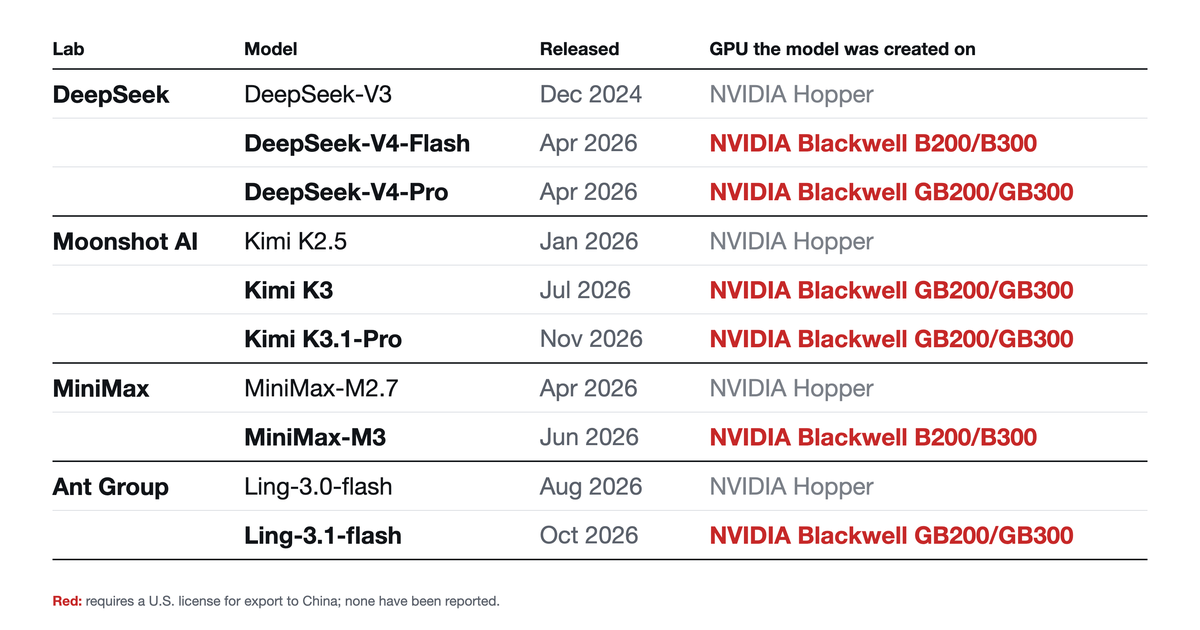
- Six Chinese AI models carry Blackwell fingerprintsA forensic study of open weights says six models from DeepSeek, Moonshot, MiniMax and Ant Group were started on export-controlled Blackwell chips.TechCrunch · 4d ago
- Podqi finds chatbots sending shoppers to risky sitesA Podqi study found Perplexity, ChatGPT and Gemini showed risky or fake retail sites in 4% to 15% of shopping answers.The Verge · 6d ago

- DeepMind launches AlphaGenome 2 DNA model via API
For founders: A startup cannot use the AlphaGenome Services for company work. The AlphaGenome terms open them only to individuals, non-commercial organizations and…
Google DeepMind · 7d ago - AlphaProof Code verifies Signal's libsignal in Lean
For founders: Specifications are now the expensive part. A team of five finished in four weeks without writing proof code themselves.
Google DeepMind · 8d ago - OpenAI claims AI proofs on Kakeya, ETH and QCD
For founders: Watch the ETH review closely. If it holds, problems long assumed hard under ETH may admit faster exact algorithms, though OpenAI itself says practical gains…
OpenAI · 23d ago

