Bharat Semi raises $24M seed for AI image sensors

Indian chip startup Bharat Semi raised a $24M seed to build image sensors that run AI on the chip, and says it has design wins with General Atomics.
What it means for founders
A $24 million seed for a pre-revenue chip company is a sign of how much some physical AI hardware startups now raise before a first shipment. If you are raising for hardware, note what Bharat Semi brought to the table: claimed design wins, a CTO from an incumbent and a 2027 production target.
If you build robotics, drones or smart devices, on-sensor AI is worth tracking. If the cost claims hold, simpler devices could run vision tasks without a separate processor, which changes your bill of materials and power budget. Ask for samples once the second generation reaches prototype in 2027.
It also fits India's push to design chips for global buyers, not only to manufacture them. Watch for whether more US defense and aerospace firms sign Indian chip suppliers as they diversify away from China. Enki has tracked how big early rounds keep growing across AI.
What we don't know yet
Bharat Semi's valuation, the size of its design wins and the foundry that will make its chips were not disclosed in TechCrunch's report. The 70% cost saving is the company's own claim and has not been shown in a shipping product.
The story
New Delhi chip startup Bharat Semi has closed a $24 million seed round for image sensors that capture, process and run AI on a single chip, TechCrunch reports. The all-equity round was led by Info Edge Group, South Park Commons and Indus Bridge Ventures. Valour Capital, Micromax, Gaingels and individual investors also took part.
TechCrunch describes the company as nearly five years old and pre-revenue. It says it has design wins with General Atomics, a US defense technology company, and India's Kaynes Semicon, but the sensors are still in development, with initial commercial production targeted for 2027.
Sensors that do the thinking
Conventional camera setups use three parts: the sensor, a separate image signal processor and a system-on-chip. Bharat Semi wants to fold all three into one programmable sensor. Co-founder Vrinda Kapoor told TechCrunch that merging them could make the whole system at least 70% cheaper.
"Our aim here is to move from sensors to sense-making solutions," Kapoor said.
It is aiming at aerospace, factory automation, surveillance and smart homes. Kapoor gave two examples: an air conditioner that notices a room is empty and adjusts itself, and a drone that processes what it sees without expensive computing hardware elsewhere on board.
First-generation sensors are in prototyping. Second-generation parts with more advanced AI are expected to reach prototype by mid-2027, Kapoor said, and the company plans to get them to customers by the end of 2027.
Kapoor, a South Park Commons fellow, co-founded Bharat Semi in late 2021 with Vinayak Dalmia, now its managing director, who previously worked at McKinsey and in private equity, TechCrunch reports. Boyd Fowler, its CTO, was previously CTO at OmniVision, the image-sensor maker. The team numbers about 75 people in India and the US, including 10 to 12 in the US, and the company wants roughly 20 US staff by mid-2027.
The startup plans to stay fabless. A separate fab project announced in 2024 with a US Space Force technology partnership is still looking for Indian partners, and none of the new money goes to it.
Sources
More in Funding & Business
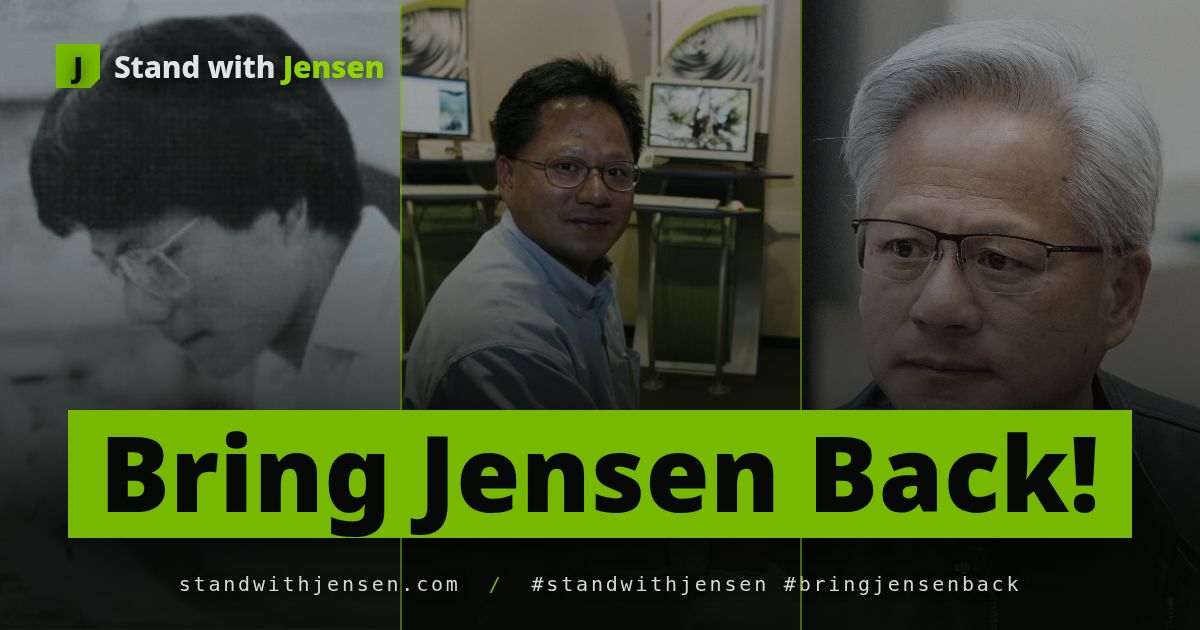
- Huang allies press Nvidia's board to bring him backAn open letter to bring Jensen Huang back passed 175,000 names as investors urge the board to keep his return on the table before earnings.TechCrunch · 3d ago
- Nebius plans $40B buildout on prepayments and loans

For founders: Nebius GPU hours cost more. Nebius says Q3 prices rose an average of over 20% per GPU-hour from Q2.
TechCrunch · 5d ago - Nvidia-backed startups brace for smaller checks

For founders: Model a round without Nvidia. If your raise counts on Nvidia as lead or anchor, build a plan where it writes less or nothing, and expect other VCs to balk at…
TechCrunch · 4d ago - Jensen Huang resigns as Nvidia CEO, Kress steps inNvidia CFO Colette Kress is interim CEO after Jensen Huang quit. What founders who depend on Nvidia chips should watch next.TechCrunch · 6d ago

- LangChain raises $300M at a $3B valuationLangChain raised $300M led by CapitalG to grow LangSmith, its tool for running and governing agents across any model.TechCrunch · 4d ago
