Amazon pledges $1 billion to data center neighbors and drops NDAs
By EnkiEdited by VK, Editor
Published
Reporting from Ars Technica, The Verge
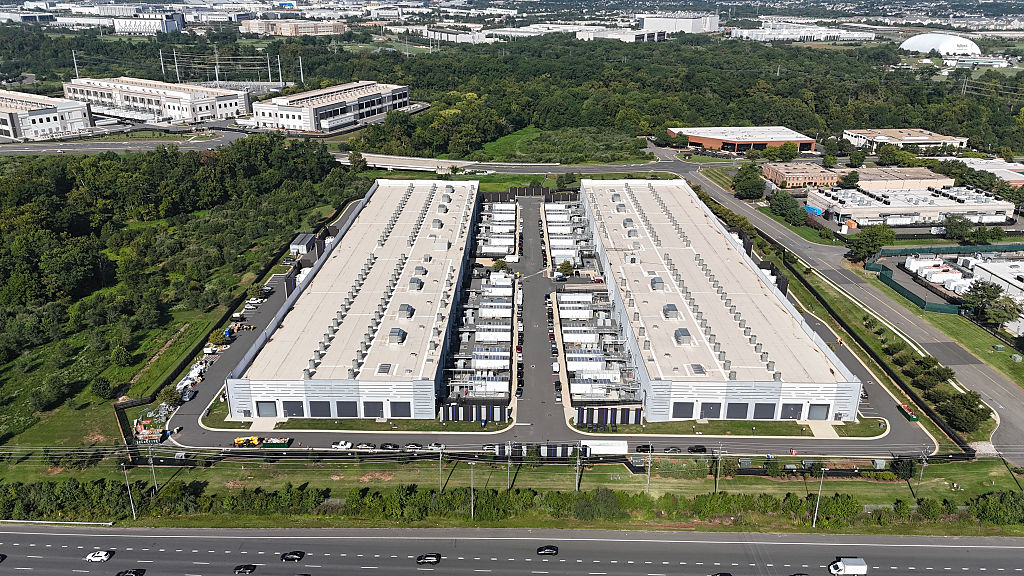
AWS CEO Matt Garman committed more than $1 billion over five years to communities near Amazon data centers and ended NDAs with local officials, while arguing moratoriums threaten the US lead in AI. Critics call it too small.
What it means for founders
- Compute costs and availability now depend partly on local politics. If moratoriums spread, new capacity arrives more slowly, which props up today's GPU and API prices rather than lowering them.
- Expect every large cloud provider to publish similar pledges. If you sell sustainability, energy or community engagement software, utilities, counties and hyperscalers will need reporting on exactly these commitments.
- Founders building data centers or energy projects should treat the end of NDAs as the new baseline. Plan for public disclosure of power and water use from the first meeting with local officials.
- Watch the moratorium votes Garman referred to and any action on the Pecos plant. Those decisions will show whether pledges like this actually unlock permits.
The story
Amazon has published what it calls a Data Center Commitment, a set of promises meant to ease the local opposition that has stalled data center projects across the US. AWS chief executive Matt Garman laid it out in a post of more than 3,000 words on Friday, pairing concessions with a warning: more than 100 data center moratoriums are under consideration nationwide, he wrote, and passing them would hand the AI race to rivals.
The commitments
The headline pledge is more than $1 billion over five years for communities near Amazon data centers, with residents deciding how to split it across education, job training, energy affordability, water and their own priorities. Amazon also says its facilities will not raise local power bills or drain local water, and repeats a goal of being water positive by 2030, claiming three quarters of projects already meet it. On pollution, it says backup generators typically run about ten hours a year, and promises to use the lowest emission options available.
One change drew praise even from critics: Amazon says it no longer signs nondisclosure agreements with government agencies about data center projects. The move follows questions from Representative Jamie Raskin about secret deals with local officials, and chief legal officer David Zapolsky told The Wall Street Journal that the secrecy had been an industry reflex that no longer made sense.
The pushback
Garman's post framed much of the opposition as driven by misinformation, including reports of foreign campaigns trying to slow US construction, echoing claims from President Trump. That framing landed badly with environmental groups. Stand.Earth told Ars Technica the commitments were damage control that skip the biggest issue: a gas power plant Amazon is backing in Pecos, Texas, which the group says would become the single largest source of climate emissions in the US. It also cited cases where Amazon sites ran on diesel backup for days rather than hours, and noted the water pledge ignores water used to generate the power itself.
Scale is the other complaint. Amazon says it already gave more than $1 billion to these communities over the past three years, so the new pledge is roughly flat. Against about $220 billion Amazon is spending on data centers this year, Stand.Earth called it "a drop in the bucket."
What we don't know yet
Amazon has not said how it will measure or enforce the promise not to raise power bills, which utilities and regulators set, or how the $1 billion will be divided between sites.
Sources
Enki Daily
Get stories like this every weekday morning.
The day's AI stories for founders, each with what it means for your company. Free.
More in Funding & Business
- Anthropic prospectus shows 12x revenue growth and $8.06 billion operating loss
For founders: Compute sets the floor on your API bill. It was Anthropic's largest cost in 2025, and prices ultimately have to cover it.
TechCrunch · 4d ago - AMD agrees to buy Fei-Fei Li's World Labs in $8.2 billion stock deal

For founders: Check your dependency on Marble or Atlas. If you build on World Labs' tools for 3D content, simulation or robot training data, plan for pricing, licensing or…
TechCrunch · 4d ago - Meta launches enterprise AI unit and hires MongoDB CEO CJ Desai to lead it
For founders: Another low-cost model vendor is courting business. At $1.25 and $4.25 per million tokens, Muse Spark sits at the cheaper end of current frontier APIs, so…
TechCrunch · 4d ago - Insurers say hospitals' AI billing tools added $942 million in costs

For founders: Revenue share pricing sells, and invites scrutiny. Paying a vendor a cut of recovered revenue makes the purchase easy for a hospital, but it is also the…
TechCrunch · 6d ago - $100 million-plus Series A rounds hit a multiyear high in 2026, led by AI

For founders: The bar for a standout round has moved. When more than 100 companies raise $100 million at Series A, investors benchmark leaders against that scale, which can…
Crunchbase News · 10d ago